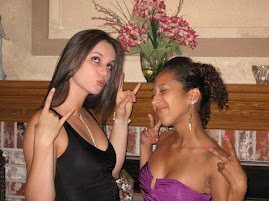
Although I am still very young at the age of twenty, I can still see major differences in popular culture from when I was a child. When I was a child, I didn't really care about what was going on in the world, let alone even down my street, if it didn't have anything to directly affect me. My popular culture was to play outside, collect Pokemon cards, get the newest toys, and enjoy the simple things in life.
Now that I am older and have become more concerned about the world and how it affects everyone, directly and indirectly, my popular culture has completely changed. Education seems to have rebounded in its important, which I think has a lot to do with the current economic situation, along with technology's rapid advancements. Before President Barack Obama became a viable candidate for the Oval Office, many Americans (especially the youth), were deemed apathetic to politics. Now, however, we can see a new, seemingly rejuvenated youth involvement in politics. However, this makes me wonder if the youth is truly interested or merely excited for an "apparent" change in the looks of the White House, per se.
Proposition 8 is, I think, the biggest reminder of how popular culture has changed in the past decade. Who would have thought California's would be voting on whether or not homosexuals could marry or not? Especially when, even just a few years ago, being openly gay was still a taboo in some areas. Right down the street from my house, I saw protests for and against Proposition 8. I have never seen protests like that before and it definitely made me think of how much, even my little area of Fair Oaks, has changed. I never stood on the street corners of Greenback Lane and Sunrise Boulevard, but I openly spoke out against Proposition 8 and made it personal, even though I am not a homosexual. Popular culture is defined by how it influences everyone involved, whether it be directly or indirectly.
Monday, March 16, 2009

Friday, March 13, 2009
Pre-Reading Blog #3
Popular culture is merely a fad. Ideas, trends, etc. come and go like the days go by. Popular culture is all around and anyone can see the culture of a society easily by what people are wearing, what people are talking about, and on and on.
When I was younger, I was very much into the popular culture of American society. I wanted to have the most current style of clothing, hair, etc. I listened to the most popular music, and not necessarily because I liked it, but because everyone else was doing it. I do think that young teens, such as myself at the time, are very susceptible to outside influences in every aspect, especially popular ideas and trends.
Now, I am still at a very young twenty years old, but I have developed my own identity. I seriously went through an identity crisis for a few months, where I changed things about myself in hopes of finding the real me, outside of the popular culture. Now, instead of having light brown (dyed) hair, I have black hair. Instead of having long, straight hair, I have a short, Joan Jett inspired haircut. My taste in music has changed. Everyone loves Lil' Wayne and I cannot stand him. If I was still young and immature I would be in the crowd along with everyone else, loving the new Lil' Wayne songs, even if I didn't really like them. Now, I found my love for country and alternative, things that are definitely not as popular among African-Americans (which I am).
I do still have a popular culture influence in my life, but the difference is that I made it individual and specific to myself. I watch Lifetime movies, Tru Tv crime shows, The Real World, and my all time favorite, Desperate Housewives. I do not watch music videos or BET, like I would be expected to. I have my own sense of style. I mix punk-rock with prep, heels with loose clothes. I am making myself an individual, but still keeping popular culture in tact, just keeping it in tact my way.
Popular culture has been around forever because many people cannot find their own identity and therefore, find something common to identify with. Stereotypes were probably born out of popular culture, which can be based upon assumptions, founded and unfounded.
Why does society play the role of sheep, herding together so they don't stand out, rather than creating their own popular culture?
Subscribe to:
Comments (Atom)